Everyday Food Safety

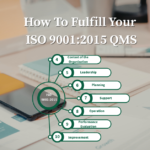
How to Fulfill Your ISO 9001:2015 – Each Clause Requirements
If you’re looking for detailed information, this ISO 9001:2015 QMS Guide will help you understand how to implement and maintain the standard.
In this guide, we will walk you through how to fulfill each ISO 9001:2015 clause requirement in practice, including the forms, templates, and records you need to maintain.
Many organizations struggle with ISO 9001:2015, not because the standard is complicated, but because they are unsure how to translate requirements into actual records and actions.
They write policies.
They create procedures.
Yet during audits, the same question keeps coming up. “Show me the evidence.”
Let’s break it down clearly — clause by clause.
Clause 4 – Context of the Organization
How to Comply with This Clause
First, you must understand your organization’s environment. ISO 9001:2015 QMS requires you to identify internal and external issues (including climate change, based on the 2024 amendment), determine interested parties, and define the scope of your QMS.
In other words, you must know who affects your business — and who your business affects.
Examples of Records and Documents
- SWOT Analysis
- Interested Parties Register
- QMS Scope Statement
- Process Mapping Documents
- Legal and Regulatory Register (if applicable)
- Climate Change Relevance Assessment (new addition)
How to Fulfill This Clause
Start by conducting a structured ISO 9001:2015 QMS Guide management training workshop. Discuss market conditions, regulatory requirements, risks, and stakeholder expectations. Then document everything formally.
Add a simple section in your context analysis titled:
“Climate Change Relevance Evaluation.”
Document:
- Whether climate change affects your organization
- Identified risks or opportunities (if any)
- Justification if deemed not applicable
Then review this information at least once a year to keep it up to date. A static context analysis quickly becomes outdated — especially in a changing regulatory environment.
Review this information at least once per year or as part of your management review to keep it up to date. A static context analysis quickly becomes outdated.
Clause 5 – Leadership
How to Comply with This Clause
ISO 9001:2015 QMS places responsibility directly on top management. Leadership must demonstrate commitment, promote a customer-focused mindset, and ensure the QMS is integrated into daily operations.
Quality cannot survive without leadership involvement.
Examples of Records and Documents
- Quality Policy
- Roles & Responsibilities Matrix
- Communication Records
- Management Commitment Declaration
How to Fulfill This Clause
Top management must formally approve the Quality Policy. Then communicate it clearly across the organization. Record awareness training sessions and meeting discussions as evidence.
If leadership actively reviews objectives and participates in management reviews, auditors will see real commitment — not just paperwork.
Clause 6 – Planning
How to Comply with This Clause
This clause introduces risk-based thinking. You must identify risks and opportunities that could affect your ability to deliver quality products or services.
Additionally, you must establish measurable quality objectives.
Examples of Records and Documents
- Risk & Opportunity Register
- Quality Objectives Tracker
- KPI Monitoring Records
- Change Management Records
How to Fulfill This Clause
Identify risks that affect quality performance. Assign responsibilities, deadlines, and mitigation actions. Then monitor your quality objectives regularly — monthly or quarterly works best.
Planning is not a one-time activity. It is an ongoing discipline.
Clause 7 – Support
How to Comply with This Clause
You must provide adequate resources to maintain your QMS. This includes competent personnel, maintained equipment, and controlled, documented information.
Simply put, your system must be supported — not just written.
Examples of Records and Documents
- Training Needs Analysis (TNA) Records of each employee
- Training Attendance Record
- Competency Matrix
- Calibration Log
- Preventive Maintenance Log
- Document Control Register
How to Fulfill This Clause
Assess staff competence annually. Provide necessary training and document attendance. Maintain updated document master lists with revision control.
Most ISO 9001:2015 QMS audit findings originate from weak document control and incomplete training records. Do not underestimate this clause.
Clause 8 – Operation
How to Comply with This Clause
Clause 8 governs operational control. You must plan, implement, and control the processes that deliver your product or service.
This is where compliance becomes visible.
Examples of Records and Documents
- SOP Template
- Work Instruction Template
- Supplier Evaluation Form
- Approved Supplier List
- Inspection & Test Record
- Nonconformance Report (NCR)
- Corrective Action Form
How to Fulfill This Clause of the ISO 9001:2015 QMS
Standardize operational procedures. Evaluate suppliers at planned intervals. Record inspection results consistently.
Most importantly, document every nonconformance and corrective action. If it is not recorded, it did not happen.
Clause 9 – Performance Evaluation
How to Comply with This Clause
You must monitor, measure, and evaluate your QMS performance. This includes internal audits and management reviews.
You cannot improve what you do not measure.
Examples of Records and Documents
- Internal Audit Records
- Internal Audit Reports signed by the management
- Customer Satisfaction Survey Records
- Management Review Agenda & Minutes
- KPI Dashboard
How to Fulfill This Clause
Develop an annual audit program and conduct audits objectively. Then hold management review meetings at least once per year. Record decisions, action items, and performance analysis.
This clause demonstrates whether your QMS truly works.
Clause 10 – Improvement
How to Comply with This Clause
ISO 9001:2015 requires organizations to address nonconformities and drive continual improvement.
Improvement is not optional. It is expected.
Examples of Records and Documents
- Corrective Action Request Form
- Root Cause Analysis Template (5 Why or Fishbone)
- Continuous Improvement Log
- Effectiveness Verification Form
How to Fulfill This Clause
Investigate root causes systematically. Implement corrective actions promptly. Then verify effectiveness.
Track trends over time to show measurable improvement. Auditors look for evidence that problems do not repeat.
External Reference:
- International Organization for Standardization (ISO). ISO 9001:2015 – Quality Management Systems – Requirements.
Internal Reference:
- ISO 9001:2015 Quality Management System – Each Clause Explained
- GMP for Food Business: The Ultimate Guide to Compliance
- Hazard Analysis and Critical Control Points (HACCP): A Step-by-Step Guide
- Food Traceability