Everyday Food Safety
Supplier Management for Food Businesses: Practical Audit Guide
As a former Supplier Quality Officer, I’ve seen firsthand how critical supplier management is for every business. Here’s what I learned from real-world experience—and the practical steps I wish every food business would follow to build a safe, compliant, and reliable food supply chain.
Effective supplier management is essential for food safety compliance, HACCP implementation, and ISO 22000 systems in any food business. One unreliable supplier can introduce contaminated raw materials, hidden allergens, or traceability problems that threaten your entire business.
Whether you run a small food business, restaurant, catering company, or manufacturing facility, using strong supplier approval and audit systems helps you produce safe, legal, and consistent food.
This guide gives you a practical, step-by-step approach to supplier management in the food industry. Learn how to classify supplier risk, conduct supplier audits, set up approval systems, and take corrective action to protect your food business.
What is Supplier Management in the Food Industry?
Supplier management involves structuring how you select, approve, monitor, and review food suppliers to ensure they consistently meet food safety and quality requirements.
In simple terms, it ensures that everything you buy is:
- Safe for consumption or use in production
- Legally compliant with food regulations
- Correctly specified and labeled.
- Free from contamination risks
- Traceable across the supply chain
- Stored and transported under proper conditions
Effective supplier management is a core requirement in:
- HACCP systems
- ISO 22000 food safety management systems
- FSSAI compliance (India)
- FDA food safety programs
- Global food safety standards
Why Supplier Management is Critical for Food Safety
Most food safety failures do not start inside the facility—they start with suppliers.
Common supplier-related risks include:
- Contaminated raw materials
- Undeclared allergens
- Incorrect or missing labeling
- Poor storage and transport conditions
- Lack of traceability during recalls
- Substandard packaging materials
When you set up a strong supplier approval system, you can prevent these risks from ever entering your production process.
Step 1: Classify Suppliers Based on Risk
Not every supplier brings the same food safety risk. A thorough supplier risk assessment helps you prioritize audits and controls, so you can focus on what matters most.
Classify suppliers based on:
- Type of product supplied (raw material, packaging, additives, services)
- Food safety risk level (high-risk vs low-risk ingredients)
- Allergen presence
- Storage conditions (chilled, frozen, ambient)
- Direct impact on finished product safety
- History of non-compliance or complaints
Example:
- High risk: Ready-to-eat ingredients, dairy, meat, allergen-heavy materials
- Medium risk: Processed ingredients, additives
- Low risk: Packaging materials, non-food contact items
You must use risk-based classification as a key requirement in HACCP supplier control systems.
Step 2: Define Supplier Approval Requirements
Before you approve any supplier, clearly define what documents and evidence you require. Typical supplier approval documents include:
- Business license and registration
- Product specifications and technical data sheets
- Allergen declarations
- Food safety certifications (HACCP, ISO 22000, FSSC 22000)
- Certificates of Analysis (COA)
- Traceability and recall procedures
- Hygiene and sanitation practices
- Previous audit reports (if available)
Pro Tip: Don’t just collect supplier documents—always verify their validity, scope, and relevance to food safety compliance.
Step 3: Maintain an Approved Supplier List (ASL)
Maintain an Approved Supplier List (ASL) as a controlled document that lists all verified and approved suppliers. It should include:
- Food safety management system
- GMP (Good Manufacturing Practices)
- Hygiene and sanitation controls
- Pest control systems
- Storage and warehouse conditions
- Production process controls
- Allergen management
- Traceability and recall system
- Training and employee hygiene
- Handling of non-conformities
Industry Tip: Always request evidence during audits; do not accept verbal confirmation alone.
Step 5: Use a Standard Supplier Rating System
To ensure consistency, use a structured scoring system:
- C – Compliant: Fully meets requirement
- PC – Partially Compliant: Minor gaps identified
- NC – Non-Compliant: Requirement not met
- N/A – Not Applicable: Requirement does not apply
You can improve your process with a structured scoring system:
- Audit consistency
- Supplier comparison
- Decision-making accuracy
- Compliance documentation
Keep in mind: Even a supplier with a high score isn’t always a safe choice. Major failures—like allergen control or traceability gaps—can still mean you need to reject them.
Step 6: Manage Non-Conformities with SCAR
When you identify issues, formally address them using a Supplier Corrective Action Request (SCAR). A SCAR should include:
- Description of the issue
- Root cause analysis
- Corrective action plan
- Preventive measures
- Responsible person
- Deadline for completion
- Evidence of correction
- Verification and closure
This ensures continuous improvement in supplier performance.
Step 7: Supplier Approval Decision
After you evaluate suppliers, assign each one a clear status:
- Approved Supplier
- Approved with Conditions
- Conditionally Approved
- Requires Re-Audit
- Not Approved
Document all decisions with justification and review dates. This is essential for food safety compliance audits and certification readiness.
Step 8: Continuous Supplier Monitoring
You must continue supplier management after approval.
Ongoing monitoring should include:
- Incoming material inspection results
- Customer complaints linked to supplier materials
- Delivery performance and consistency
- Traceability test results
- Changes in supplier processes or ownership
- Periodic re-audits
By continuously monitoring your suppliers, you strengthen your long-term food safety and build a more reliable supply chain.
Simplify Supplier Audits with a Ready-to-Use Toolkit
If you manage supplier audits manually, you may find the process time-consuming and complex.
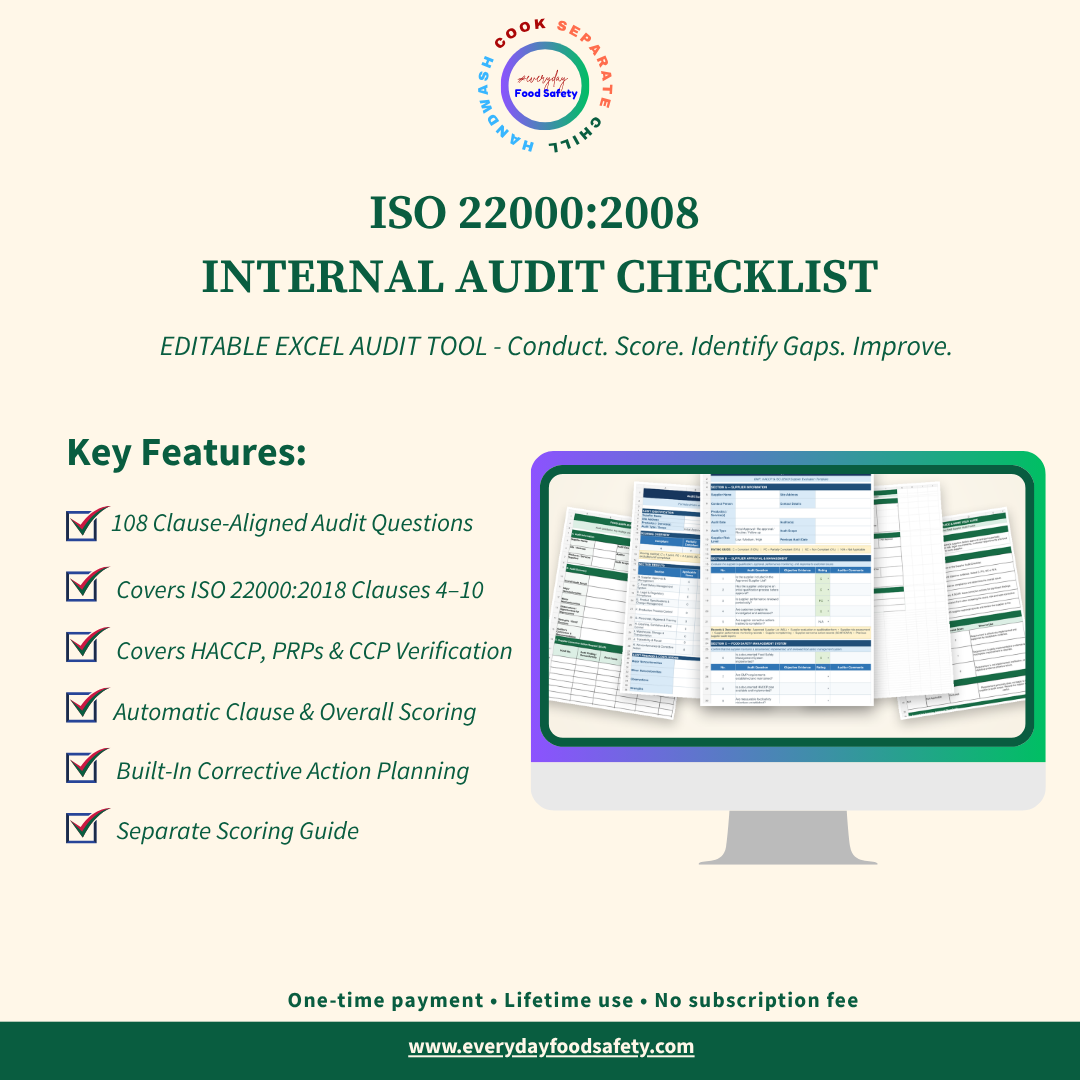
The Everyday Food Safety Supplier Audit Toolkit streamlines the whole process with a ready-to-use system designed specifically for food businesses and MSMEs.
It includes:
- standard and critical supplier audit questions
- structured audit sections
- Built-in scoring system (C, PC, NC, N/A)
- Audit summary and SCAR forms
- Supplier approval decision template
- Step-by-step instructions
- MSME-friendly guidance
Final Thoughts: Why Supplier Management Matters
Strong supplier management in food safety isn’t just about compliance. It’s a proactive control system that protects your brand, keeps your customers safe, and builds a trustworthy business reputation.
Instead of reacting to problems, a structured supplier system helps you:
- Prevent contamination before it enters your facility.
- Ensure regulatory compliance (FSSAI, ISO, HACCP)
- Improve product consistency
- Reduce food safety risks.
- Build a reliable supply chain.
In food safety, trust is never enough—verification is what keeps your business safe.
Internal References
- Food Supplier Audit Toolkit
- Good Manufacturing Practices for Food Business
- Food Traceability System: A Step-by-Step Guide
- HACCP: A Step-by-Step Guide
- ISO 9001 Quality Management System
External References
- Codex General Principles of Food Hygiene – CXC 1-1969
- FDA Supply-Chain Program and Supplier Approval Guidance
- FDA Foreign Supplier Verification Program Requirements
- ISO 22000 Food Safety Management